How to Butterfly a Chicken Breast

Following up on how to butcher a whole chicken (and save £££) when you butterfly a chicken breast it will cook twice as fast because of the larger surface area and it’s not as thick.

It’s a good skill to know if you ever want to stuff a chicken breast and it generally looks nicer on a plate.

It’s pretty simple and gets a lot easier with practise.

Where to make the incision

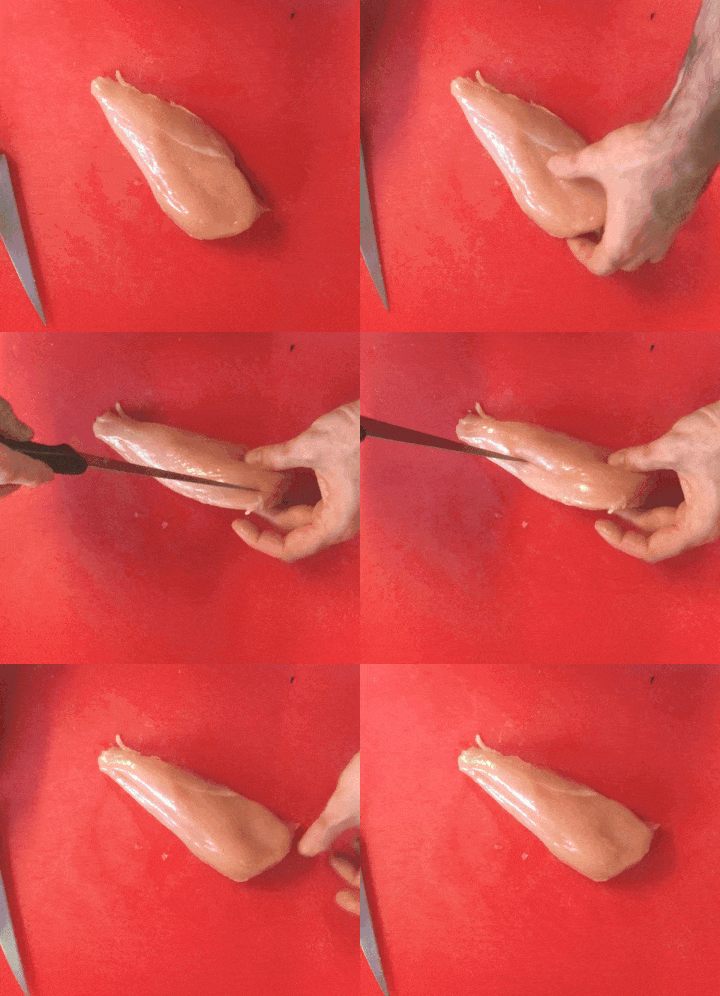
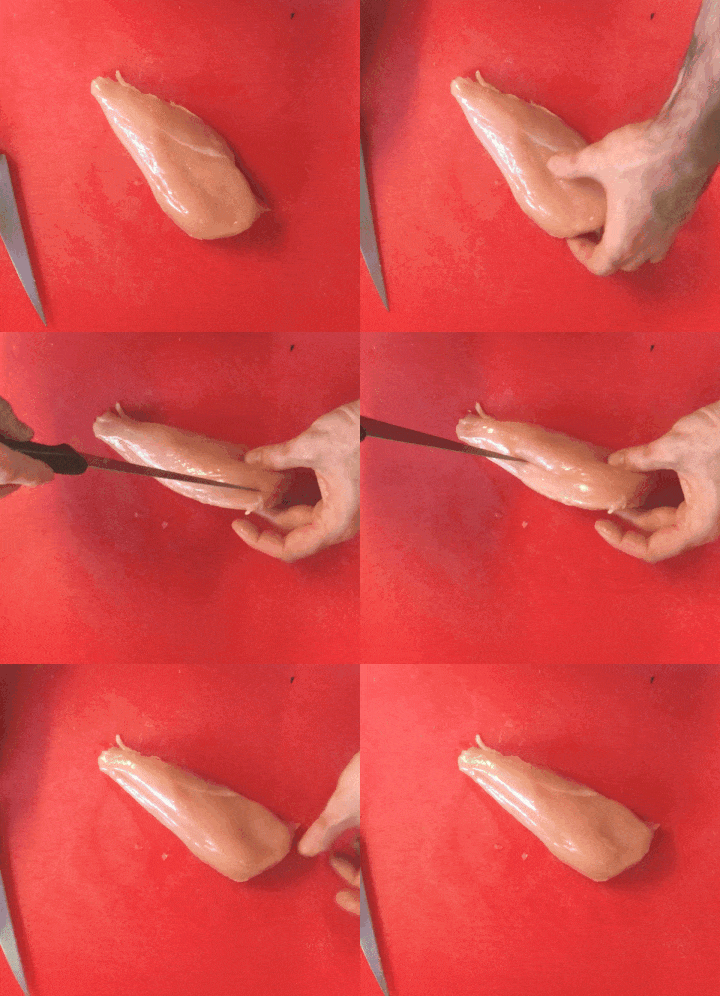
Firstly where to actually cut the breast, the incision will be made on the outside of the breast, if you’re unsure which is the outer side look at the underside of the breast, where in inner fillet is (or was if you’ve removed it) is the inner side, so the opposite side to that one.

Making the Cut

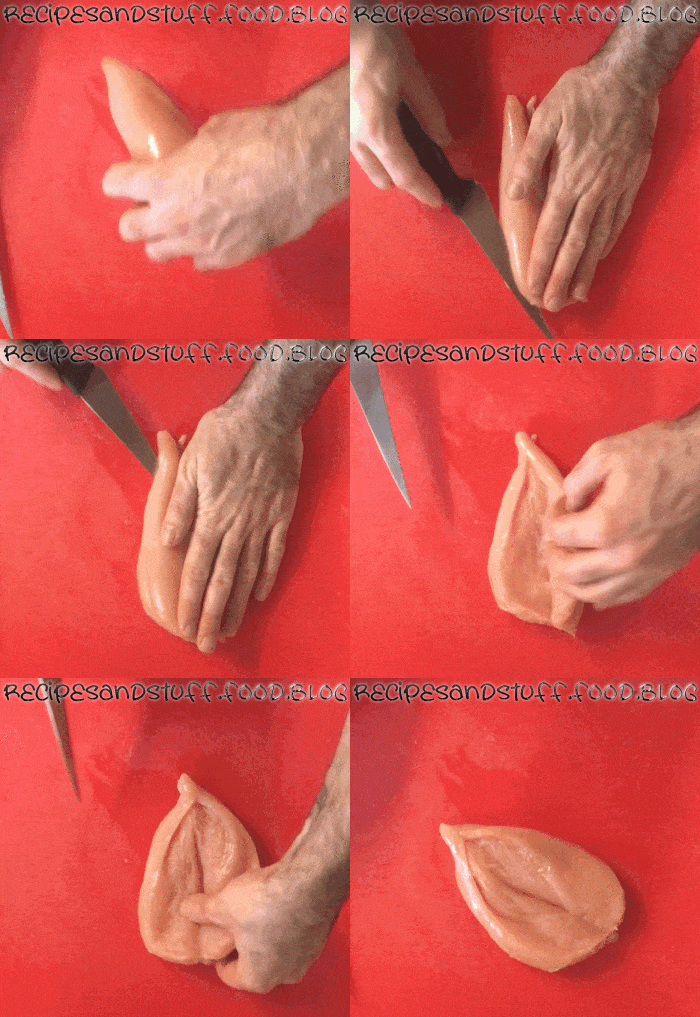
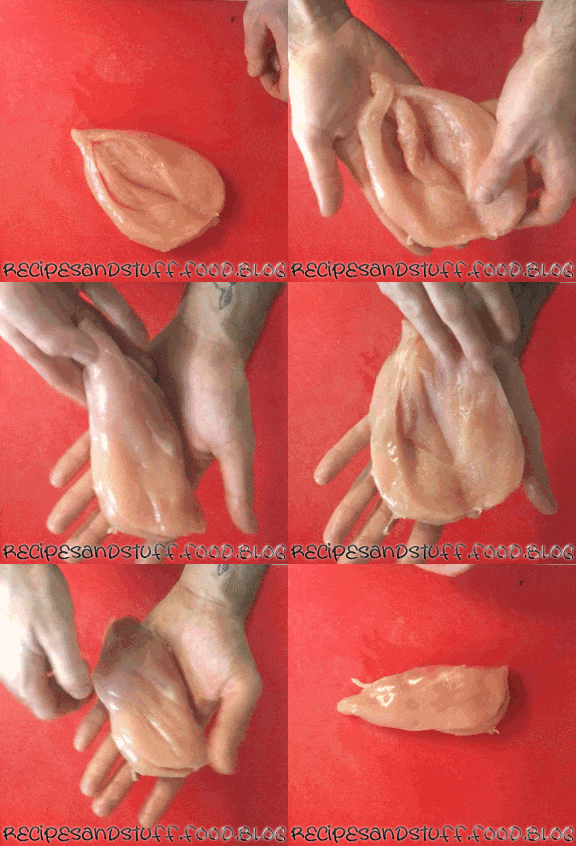
Slice into the side of the breast about 3/5’s of the way in, then open the breast up and slice down the centre to open it out fully.

Stuff, cook, marinade etc

As you can see this gives a lot more surface area so marinades get more absorption, it’s also good for stuffing as it creates a pocket.

More recipes and cooking tips soon!

Julienne slice (French cut)

A Julienne slice is essentially match sticks, but it’s a handy cut to know.


It comes in handy for a number of uses including chips and dicing,

While cutting chips is the same principle, a julienne slice tends to be much thinner but I’ve just done a fairly rough cut in the examples.

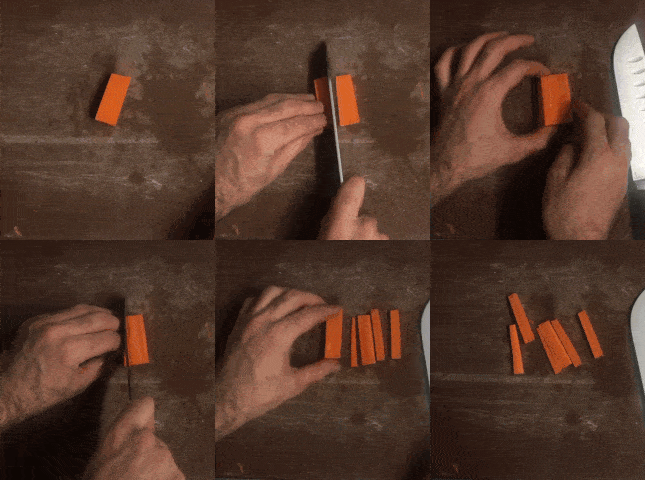
Trim the edges

Something you should never ask a cockney Gardner to do, unless you want to come back to no hedges, first we need to trim the edges so we have flat surfaces to work with.

Depending on the size of the carrot, cut it in half and the down 1 of the long sides cut about 5-10mm in, so you end up with a flat edge along one side. Then turn the carrot flat side down and repeat with the other 3 sides, so you’re left with a rectangle of carrot.

1.cut a manageable size then trim the edges

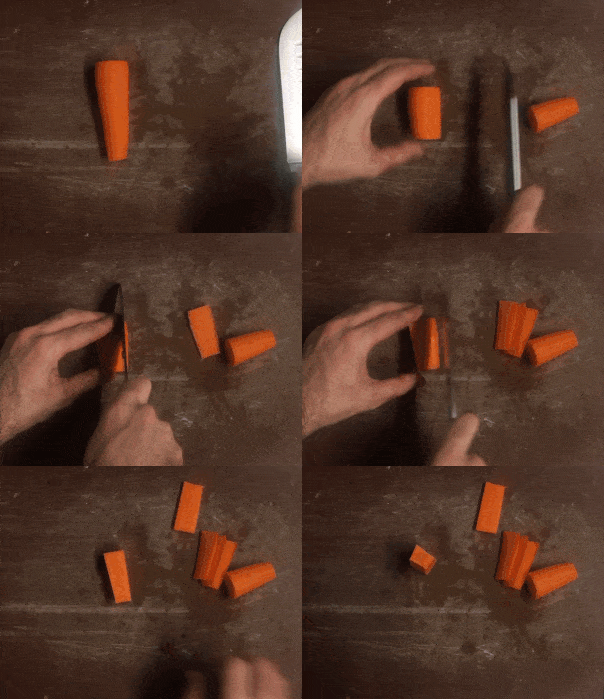
Slice into sticks

Now for the julienne slice, you can make them as thin as you like, but 2 slices on the top and 2 on the side is usually a good place to start.

Put the carrot flat on the chopping board and make 2 cuts lengthwise, then turn these 90° and stack them up again and make 2 more lengthway cuts. (In the example I only made 1 slice on the second cuts because it’s a small carrot)

3.lengthway slices to make sticks,
or a julienne slice

What about the leftovers?

With the 4 slices the remain from the edge of the carrot you can either add them to a stock/soup, use them for a carrot purée/mash or cut them into more julienne slices for cooking, eating or dicing.

use it all up!

How to dice a carrot

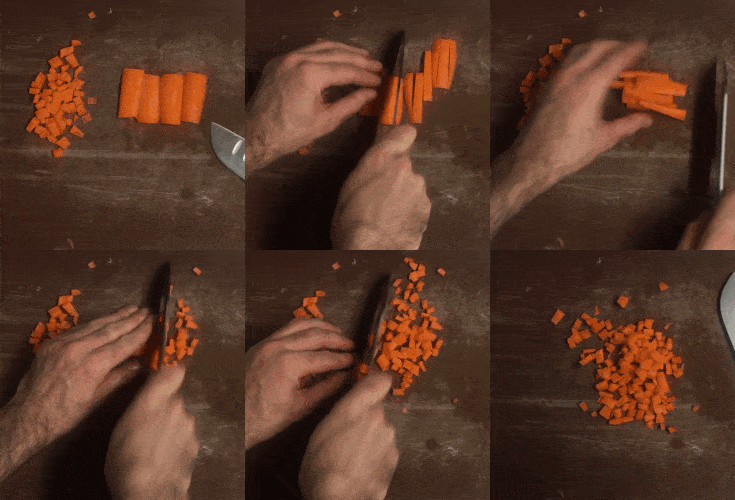
To finish up, dicing. I find this always looks like a lot of manual work has been done but it’s really not that hard.

Diced carrot cooks a lot quicker as it’s smaller in size so can be handy if you’re in a rush, though you should never rush good food!


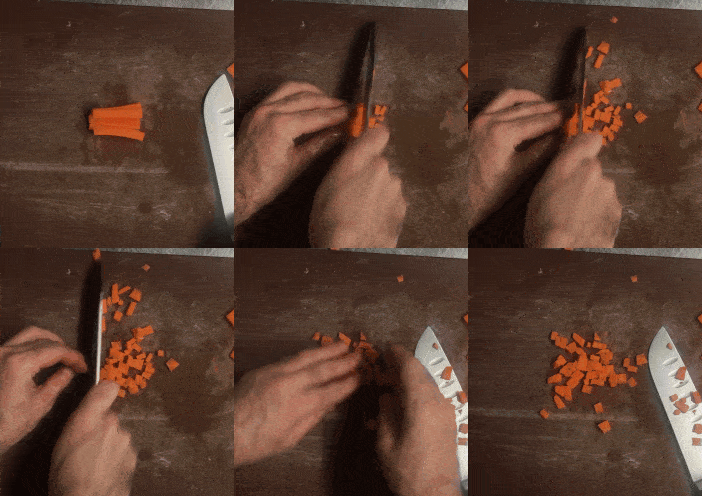
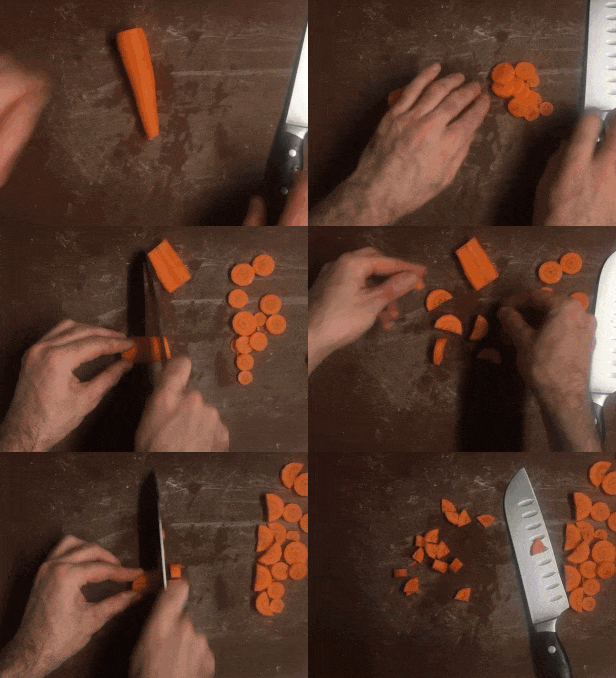
To start with cut the carrot julienne into sticks, then just bunch them together and slice to get a dice, the finer the julienne the smaller the dice will be.

slice and dice

So there you have it.

Hopefully this guide will speed up your carrot prep!

Keep an eye out for more prep guides and recipes coming soon.

Slicing carrots, whole, halves and quarters

Probably the most common way of cutting a carrot, slicing is a quick and easy way to prep a carrot.


Make sure your knife is nice and sharp as carrots are fairly dense. Lay the carrot flat on the chopping board and hold the large end with your hand and put the tip of the knife on the board and slice along the carrot.

For halves, simply cut it in half, for quarters cut a half in half.

Wholes, halves and quarters

You can also cut them at a 45° angle for a slightly fancier effect.

How to sharpen a knife properly


(Or at least to the best of my knowledge )

Over the years I’ve seen many techniques for sharpening knives, from small minuscule grinds on every section of the blade to what can only be described as abusing knives.

If you didn’t already know the most common tool for sharpening a knife is called a steel, which funnily enough is a piece of strep used to grind the blade of a knife back to sharpness.

There’s literally thousand of types of steel (the metal) and a hell of a lot of types of steel for sharpening knives and I’m not here to list them, but this https://www.bladehq.com/cat–Steel-Types–332 is quite informative if you’d like to know.

Other than steels I’ve seen a few other things used before including other knife blades (best to use old unused ones if you have to resort to it) and sandpaper which my current head chef uses to great effect on serrated knives, starting with the coarse grit and getting finer.

Anyway, a sharp knife is pretty important to cook efficiently so onto the sharpening!

I don’t know if any of the terms I’m going to use are right, or if this is even the best way to sharpen a knife but it’s always worked well for me.

  1. Take a steel run it under a cold tap just to get it wet or run the knife under water instead.
  2. Put a fist in front of you like you’re doing a thumbs up, you want to hold the steel with your thumb on the top and the rest of your fingers supporting the grip with the steel facing downwards.
  3. Take the knife and try to get it at about a 20° angle to the steel.
  4. Now you want to do an up and down grinding motion, kind of circular for about 8 rotations, the knife blade shouldn’t leave the steel.
  5. Repeat the grinding on the other side of the blade, with the other side of the steel (right or left depending where you started)
  6. Then return to the original side of the blade you were working and place the heel of the knife (bit of the blade closest to your hand as you hold it) and run the blade down the steel like you’re slicing, as the blade travels down pull the knife back towards you so as the blade reaches the bottom of the steel the tip should be the last bit touching before contact is broken with the steel.
  7. Do the same thing again on the other side of the blade, the repeat one side after the other for about 7-8 downward slices against the steel.
  8. Wipe the steel and knife clean and get choppy choppy.

Safety first!

I know it goes without saying really, but I’ve worked in kitchens for 15 years now and I still make mistakes now and then, I personally find cuts a lot worse than burns as it makes it a lot harder to keep cooking when you’re bleeding everywhere!

If you’re using knives around other people then don’t let them distract you, either put the knife down to talk to them or don’t take focus off what you’re doing because that’s all it takes.

Another thing I’ve seen quite often is people cutting themselves up because they’re trying to be fancy with the steel and go 200 mph.

Not only can you wreck your fingers and forearms (trust me I’ve done it before 😂) but it’s not the best way to sharpen a knife either (fast), it’s more important to try and keep the blade at a constant angle rather than go as fast as you can just to be cool.

I will get round to uploading some pictures to assist with the technique, my steels are always at work.